A temple underground, born of the miners' faith
The Salt Cathedral
It is worth distinguishing between two different temples in Zipaquirá. The Salt Cathedral is the great underground sanctuary carved into the mine — the one this site is about. The official diocesan cathedral, on the other hand, is in the city's historic center and corresponds to the Diocesan Cathedral Parish of Zipaquirá.
From miners' altars to today's sanctuary
The miners' faith led to small altars being raised inside the mine. The idea of turning the great mine shafts into a temple was embraced while the salt works were under the administration of the Banco de la República.
The blessing of the underground temple's first stone took place on October 7, 1950; a major construction stage was completed on July 18, 1952; and the first Salt Cathedral was solemnly inaugurated on August 15, 1954.
For structural safety reasons, that first cathedral was closed in 1992. The current Salt Cathedral was inaugurated in 1995, designed by architect Roswell Garavito Pearl — deeper, larger, and considered today one of the most impressive works of religious engineering and architecture in the world.
The three main naves
After the Way of the Cross, the visitor reaches the great open space. The Cathedral has three large naves representing the classic structure of a Christian church.
Nave of the Nativity
Represents the Incarnation: the arrival of Christ into the world.
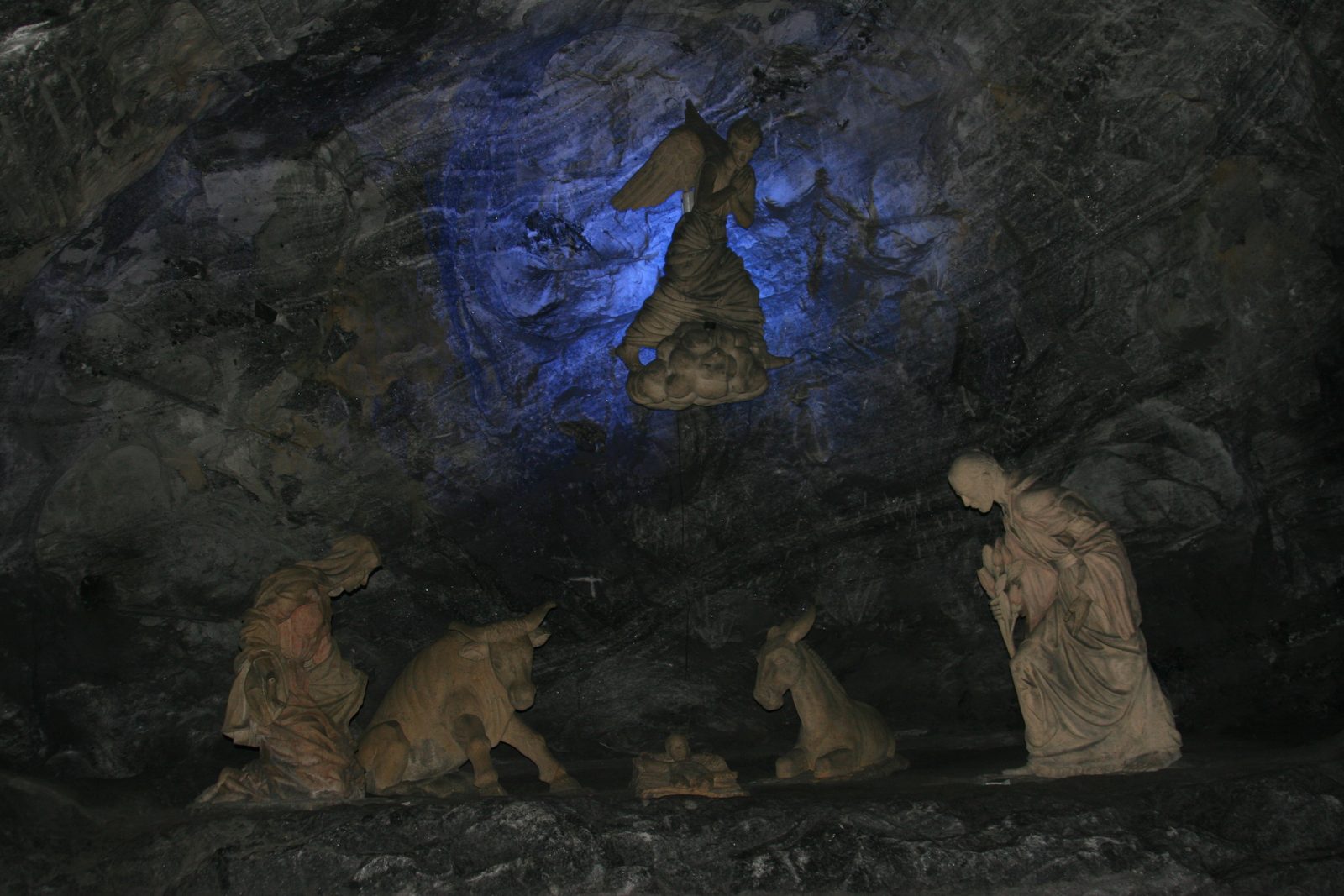
Nave of Life
Represents the preaching, miracles, and public life of Jesus.
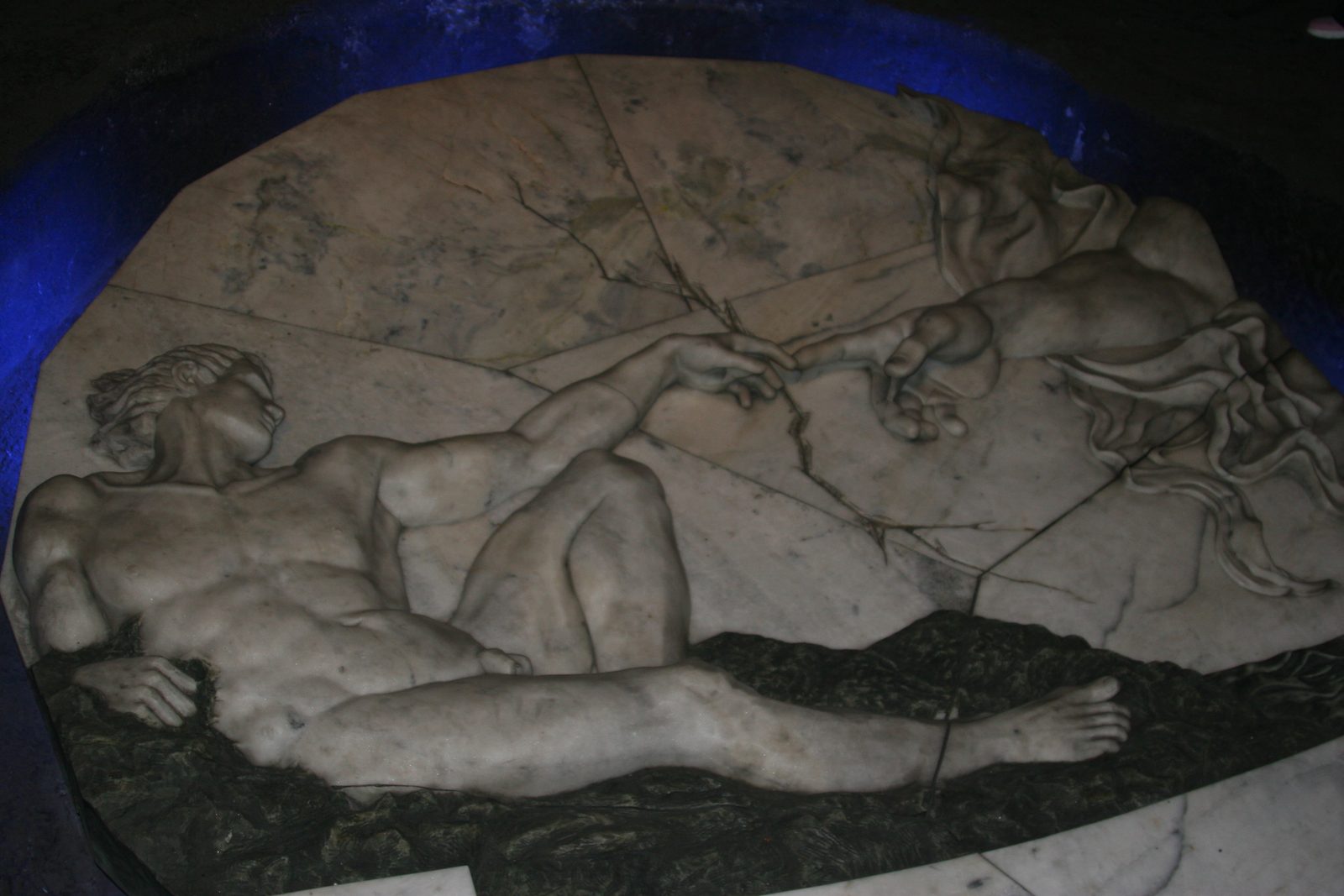
Nave of Death and Resurrection
The main nave. Here stands the enormous illuminated cross — the spiritual heart of the Cathedral.
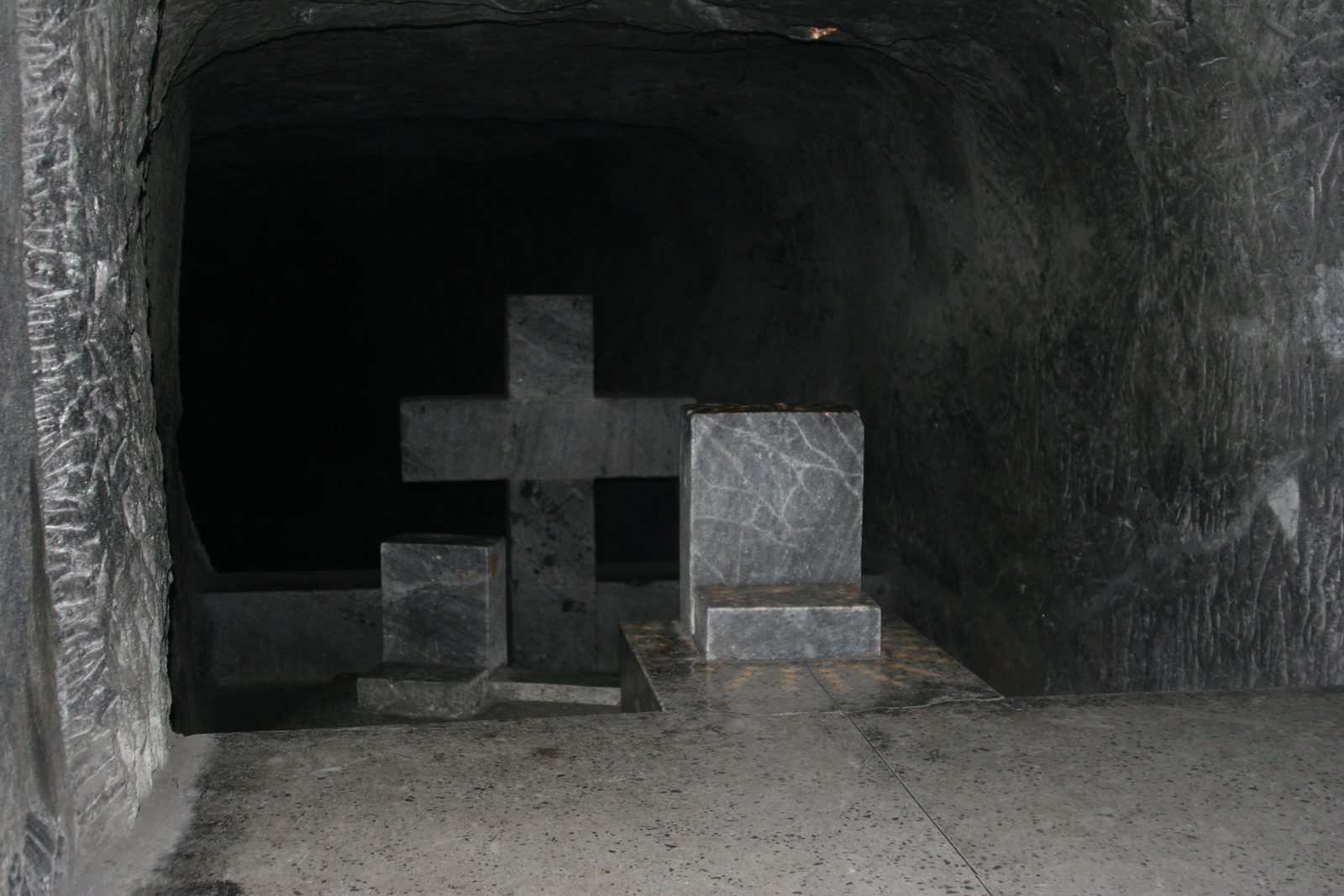
The four columns of the evangelists
In the main nave there are four enormous columns carved in salt. They represent the four Evangelists; each one symbolically upholds the Church.
Saint Matthew
Represented by the man or the angel. Symbolizes the humanity of Christ.
Saint Mark
Represented by the lion. Symbolizes strength.
Saint Luke
Represented by the ox. Represents sacrifice.
Saint John
Represented by the eagle. Represents contemplation and divinity.
In memory of the miners
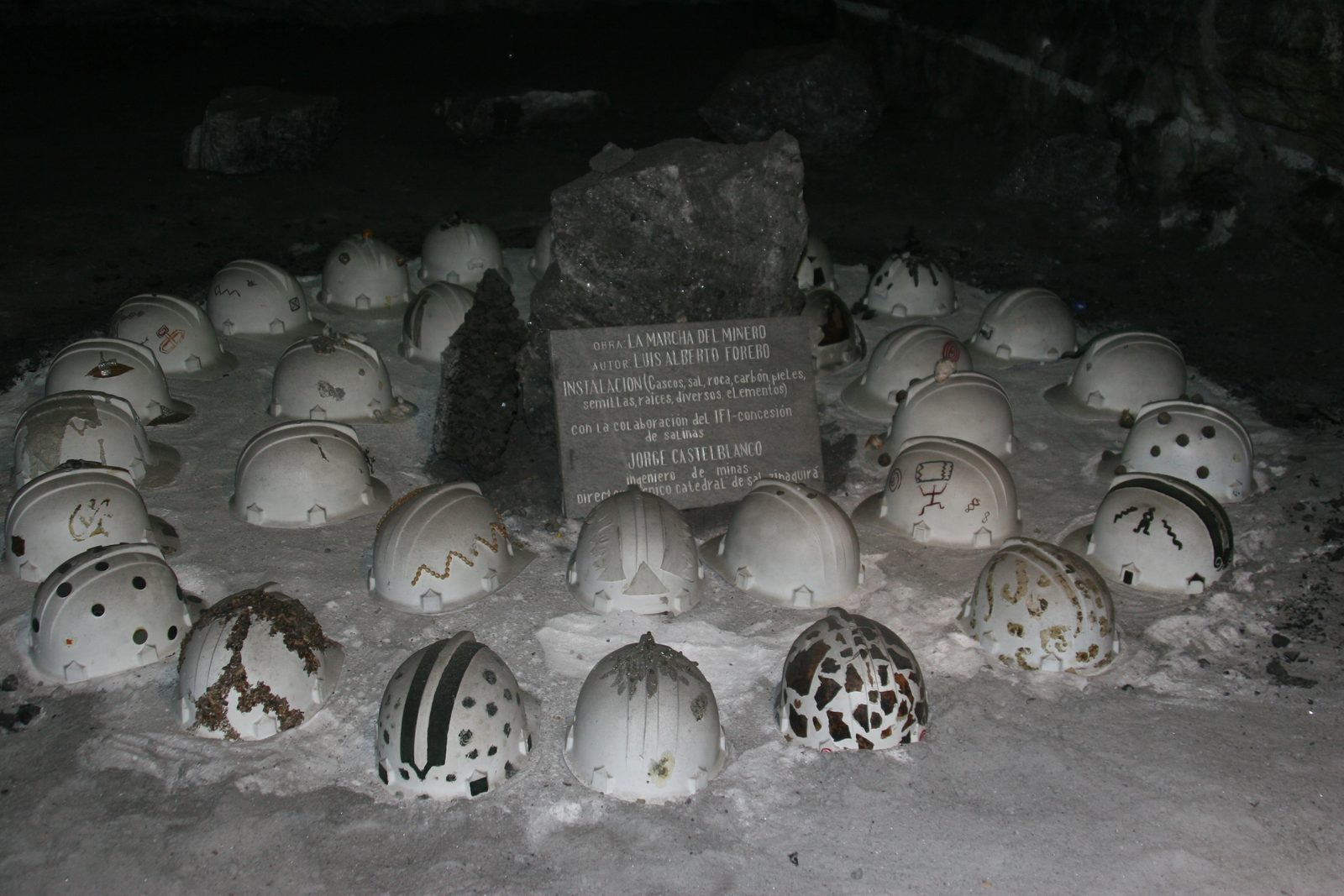
This temple is also the mark left by generations of workers who entered the mine in fear and left it placing their lives under the Virgin's protection. "La Marcha del Minero" — the circle of miners' helmets preserved along the route today — honors that memory.
Before reaching here, the pilgrim walks the Way of the Cross
The Way of the Cross →